The 3-Minute Screen-Time Eye Strain Soother
Refresh strained, tired eyes after hours of screen time with this 3-minute eye yoga sequence using palming, focus shifts, and gentle pressure.
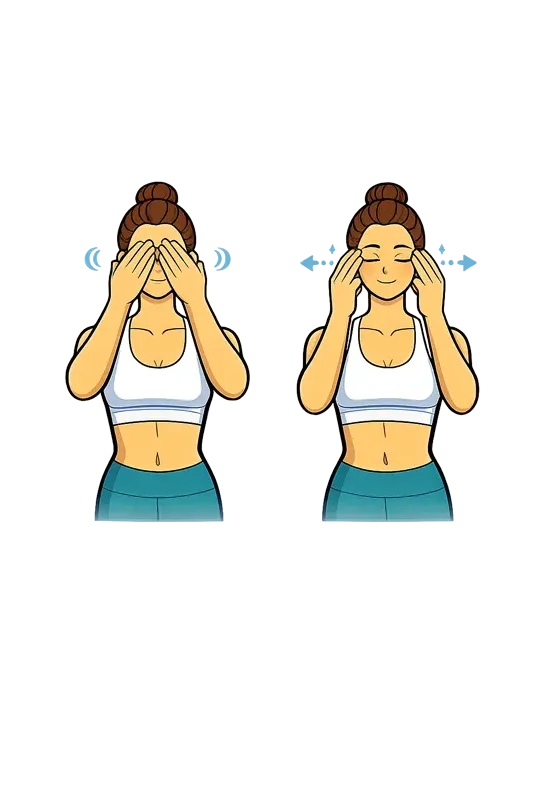
The 3-Minute Screen-Time Eye Strain Soother
Sequence — Quick Yoga Stretches Step by Step
Palming
1 minute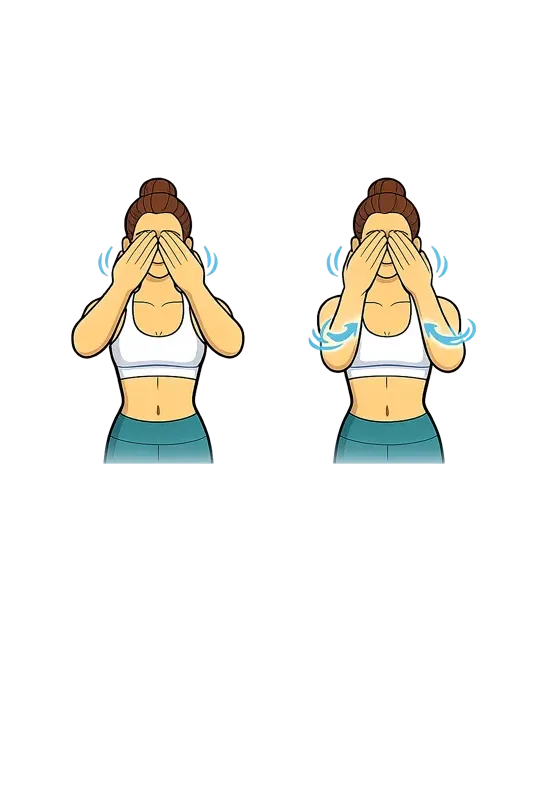
Palming Rub your palms together vigorously until they feel warm. Cup your palms over your closed eyes without applying pressure. Rest your elbows on a desk or your knees. Breathe deeply for 1 minute, letting your eyes relax in complete darkness.
Near-Far Focus Shift
1 minute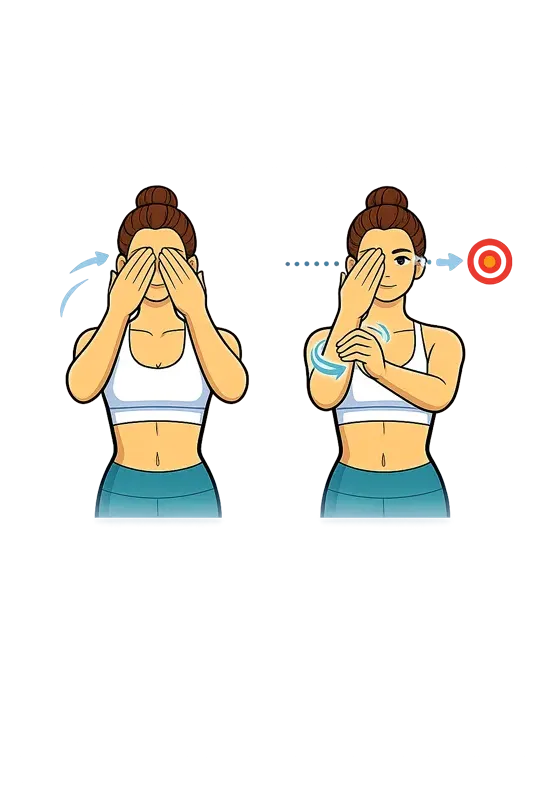
Near-Far Focus Shift Bring your thumb about 6 inches from your nose. Focus on your thumb for 5 seconds. Shift your focus to an object at least 20 feet away for 5 seconds. Repeat this cycle 6 times.
Gentle Eye Squeeze & Release
1 minute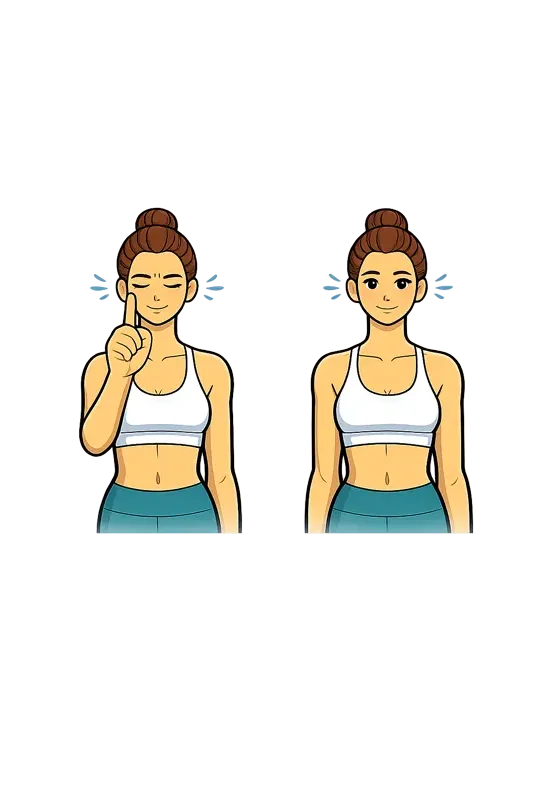
Gentle Eye Squeeze & Release Close your eyes gently. Squeeze them shut firmly for 3 seconds. Open them wide for 3 seconds. Repeat 5 times. Finish by blinking rapidly for 10 seconds.
Benefits
Physiological
- Relaxes the ciliary muscles responsible for focusing
- Improves tear film distribution and reduces dry eye
- Reduces tension in the orbicularis oculi muscles
Mental
- Provides a mental reset from screen fixation
- Reduces eye-strain headaches and discomfort
- Improves visual focus and clarity
Prolonged screen time keeps the ciliary muscles in sustained contraction, causing digital eye strain. Near-far focus shifts retrain the accommodative response of the lens, while palming provides complete darkness that allows the photoreceptors and ciliary muscles to relax fully.
The benefits of micro-yoga and breathwork are supported by peer-reviewed research and authoritative health institutions.
- Yoga for stress and anxiety: a systematic review — NCBI / PubMed Central
- Relaxation techniques: Breath control helps quell errant anxiety — Harvard Health
- Vagus nerve stimulation: Understanding the basics — Harvard Health
- Relaxation techniques for health — NIH / NCCIH