The 3-Minute Frustration & Anger Diffuser
Channel frustration into controlled intensity and release with Lion's Breath grounding. A 3-minute practice for when you want to scream but can't.
The 3-Minute Frustration & Anger Diffuser
Sequence — Quick Yoga Stretches Step by Step
Jaw Release with Lion's Breath
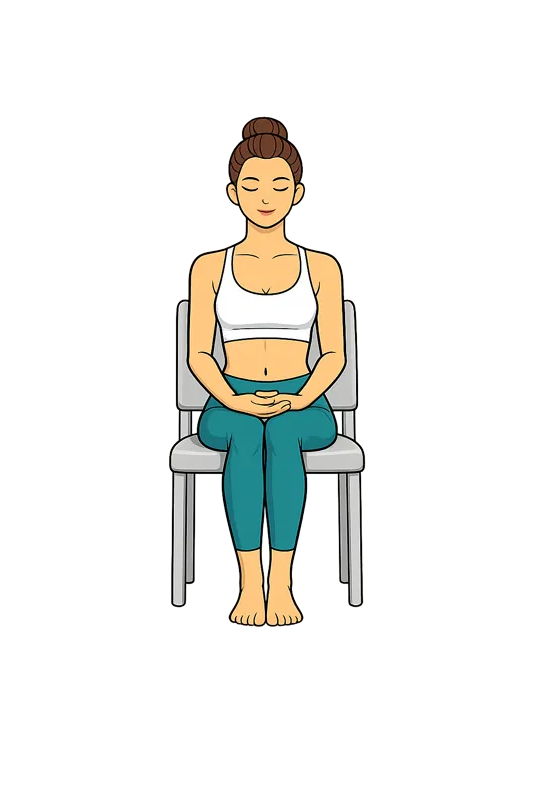
1.5 minutesJaw Release with Lion's Breath Clench your entire face and jaw tightly. Hold for 5 seconds. Release and let your mouth drop open. Repeat 3 times. Then: inhale through your nose, open your mouth wide, stick out your tongue, and exhale with a forceful "ha" sound from your belly. Repeat 5 times.
Standing Hip Sway with Side Bend
1.5 minutes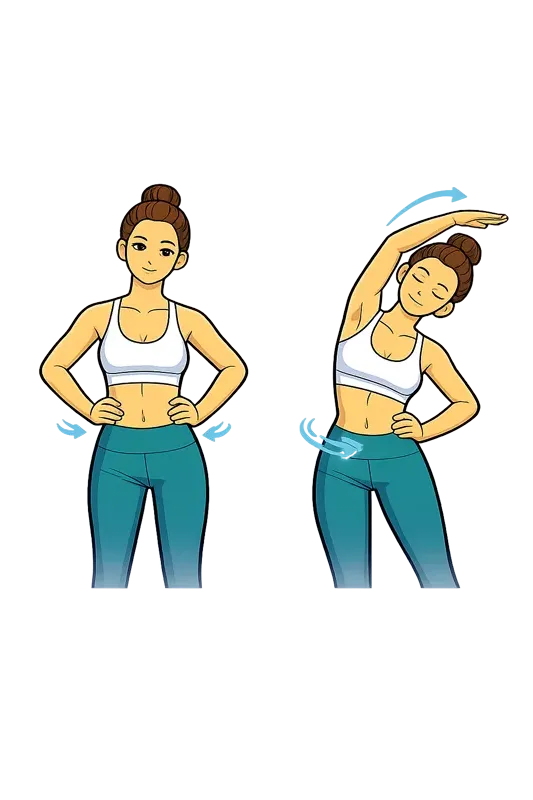
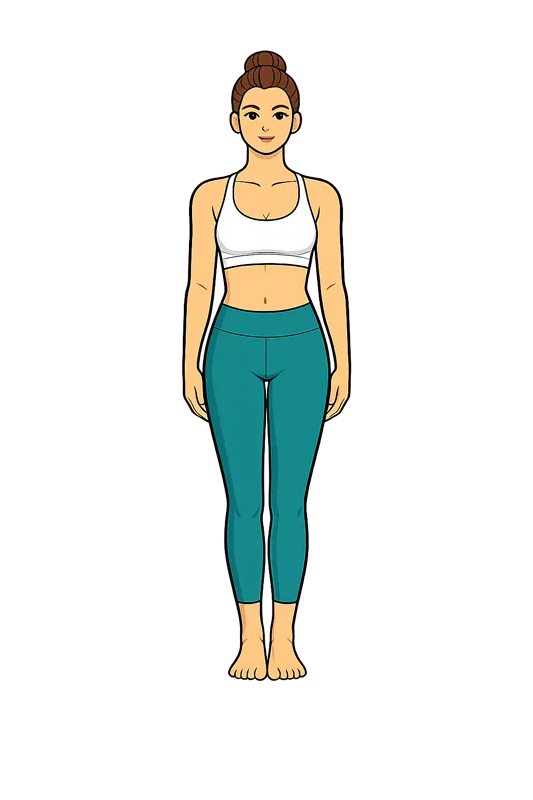
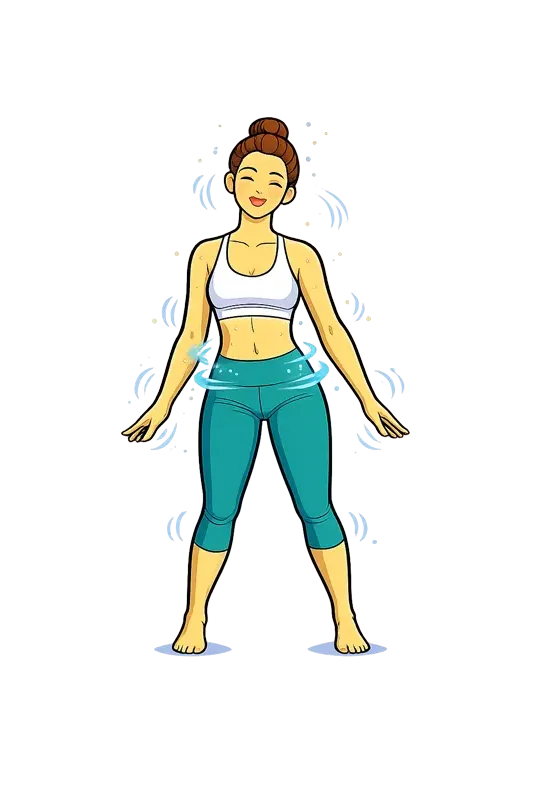
Standing Hip Sway with Side Bend Stand with feet wide. Place your hands on your hips. Sway your hips in large circles: 5 circles in one direction, 5 in the other. Then place one hand on your hip and sweep the other arm overhead, leaning to the side. Switch sides.
Benefits
Physiological
- Releases tension held in the jaw and pelvic floor
- Converts the stress response into controlled muscular release
- Activates the parasympathetic nervous system
Mental
- Validates the emotion while preventing destructive expression
- Provides a physical outlet for rage without harming relationships
- Creates space between feeling and reaction
Anger creates measurable tension in the jaw and pelvic floor as part of the fight response. Progressive muscular release in these areas, combined with a strong Lion's Breath (Simhasana), allows the nervous system to consciously complete the stress cycle, converting the arousal into controlled release and subsequent parasympathetic downshift.
The benefits of micro-yoga and breathwork are supported by peer-reviewed research and authoritative health institutions.
- Yoga for stress and anxiety: a systematic review — NCBI / PubMed Central
- Relaxation techniques: Breath control helps quell errant anxiety — Harvard Health
- Vagus nerve stimulation: Understanding the basics — Harvard Health
- Relaxation techniques for health — NIH / NCCIH